


CAPTUS
1 de June de 2023
Introducing our latest acquisition, a 3D scanner that will revolutionize the precision of our designs
5 de July de 2023SUMMARY
Nature and LED based rainwater treatment for reuse in green cities (GreenLED)
- Funding: European Commission
- Call: LIFE programme 2022 – Clima
- Project code: LIFE22-CCA-NL-GreenLED/101114560
- Budget: 4,921,712.00 €
- Period: July 2023 – June 2027
- Webpage: www.fieldfactors.com/greenled

OBJECTIVE
All-in-one storage, supply, and disinfection system.
GreenLED seeks to demonstrate the effectiveness of rainwater as an alternative water source while complying with health and water quality regulations.
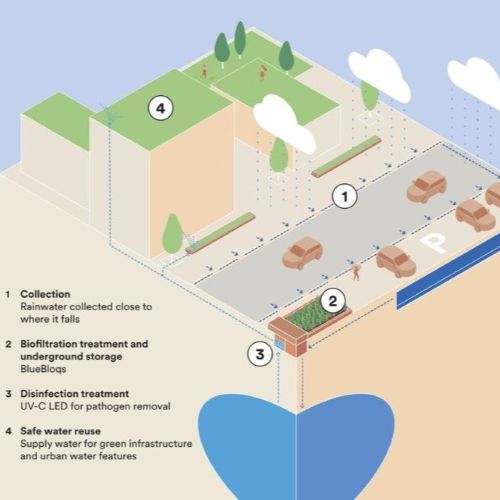
The project introduces a comprehensive system combining collection, biological treatment, and aquifer storage of rainwater, with UV-C LED disinfection prior to reuse. This chemical-free, natural, and environmentally friendly approach removes pollutants, offering a circular water management solution. The resulting high-quality water is suitable for close-contact urban applications, contributing to climate adaptation and water neutrality.

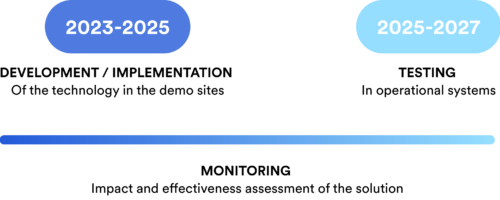
TIMELINE
The project, initiated in July 2023, is set to present its final results in June 2027
ROLE OF APRIA
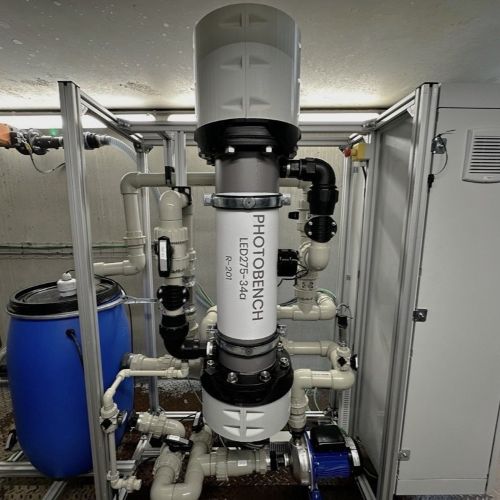
UV-C LED photoreactor prototype

Apria's role in the LIFE GreenLED project is the design, construction, and validation of an enhanced UV LED technology for disinfection, complemented by the integration of BlueBloqs technology.
This hybrid system represents a disruptive leap towards market applications in urban water reuse, aligning perfectly with the project's overall objectives.
CONSORTIUM
GreenLED is implemented by a Dutch-Spanish consortium of six partners.
Alphen aan den Rijn, Apria Systems, FieldFactors, Junta de Compensación los Ahijones,
Delft University of Technology, and Universidad Politécnica de Madrid




GreenLED is co-funded by the LIFE programme of the European Union.
Grant Agreement No. LIFE22-CCA-NL-101114560
The contents of this website are the sole responsibility of the authors and do not necessarily reflect the opinion of the European Union.
